
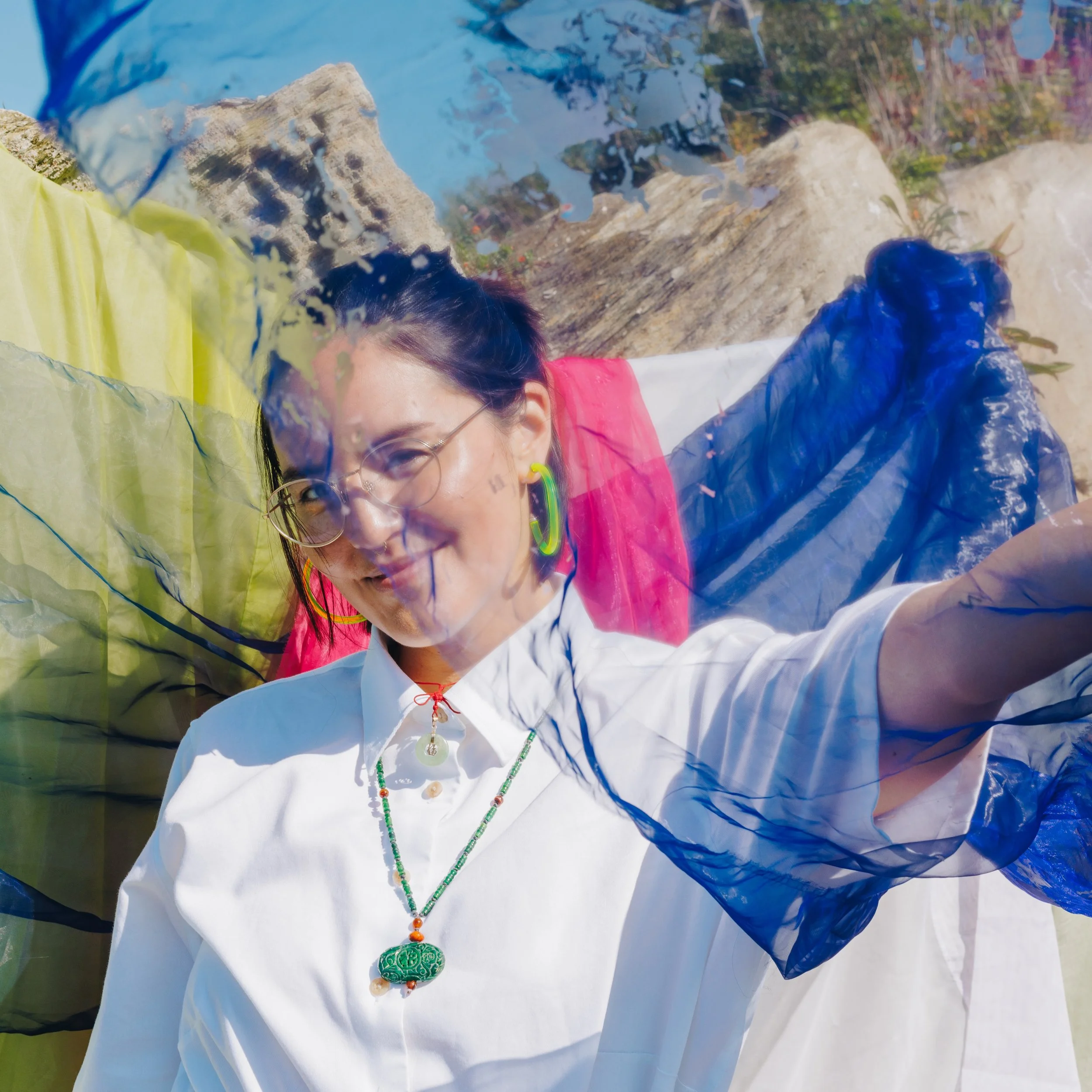
Photograph by Tarik Bartel.
Toni Morrison once said that “all water has perfect memory.”
From reflective rituals to collective imagining, this sentiment is embedded within crystal bi’s Public Art Accelerator project, which will launch into the ocean this summer.
“Toni Morrison talks about this flood of imagination,” bi explained. “That imagining is actually acting like water, remembering where we had once been.”
bi, a professor, art educator, and local artist, introduces new ways of belonging through her practice. Whether she’s building a fictional government branch or holding a community gathering, she asks that participants look backwards before setting their gaze ahead.
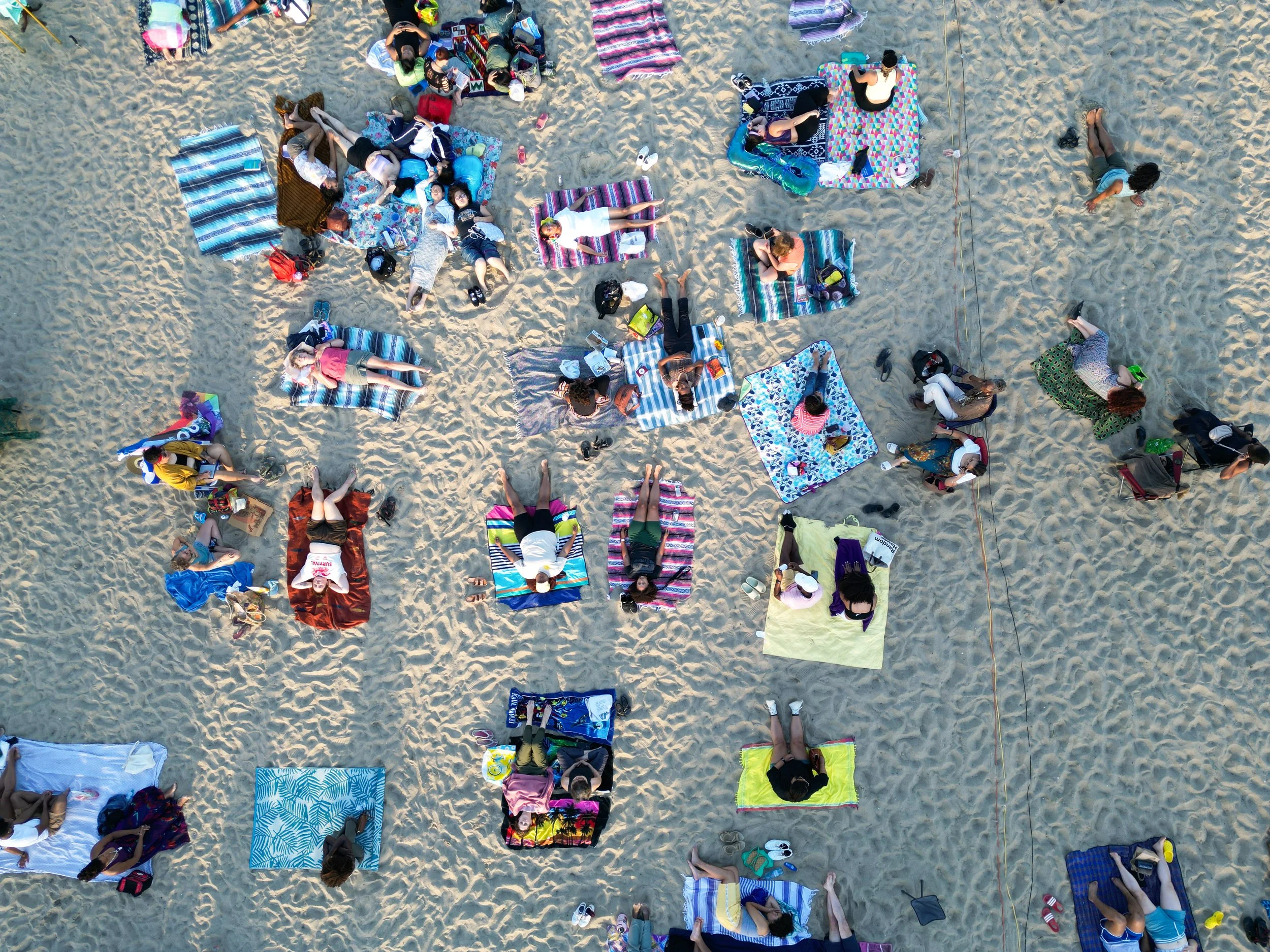
The Annual Rest and Dream Activation at Carson Beach. Photograph by Nohemi Rodriguez.
Take, for example, The Annual Rest and Dream Activation at Carson Beach.
Drawing on the historic 1975 protests at Carson Beach, where Black activists demonstrated for their right to use public space and against segregation, bi and co-artist Dzidzor Azaglo hosted their own gathering.
“Depending on who you are and how you look, we're not all able to equitably rest in public space,” bi said.
Together participants were able to pause, breathe, and give gratitude to those who imagined—and protested for— a better future.
“It feels like a really beautiful loop of who has imagined and who has fought for our ability to take up space in public,” bi said. “To activate that gratitude, and that history, and bring it into the space.”
During 2025’s iteration, participants were even able to hear from one of the original protesters themselves. Using bi’s Dream Portal Phone Booth, visitors could lift the landline to their ear and hear the stories firsthand.
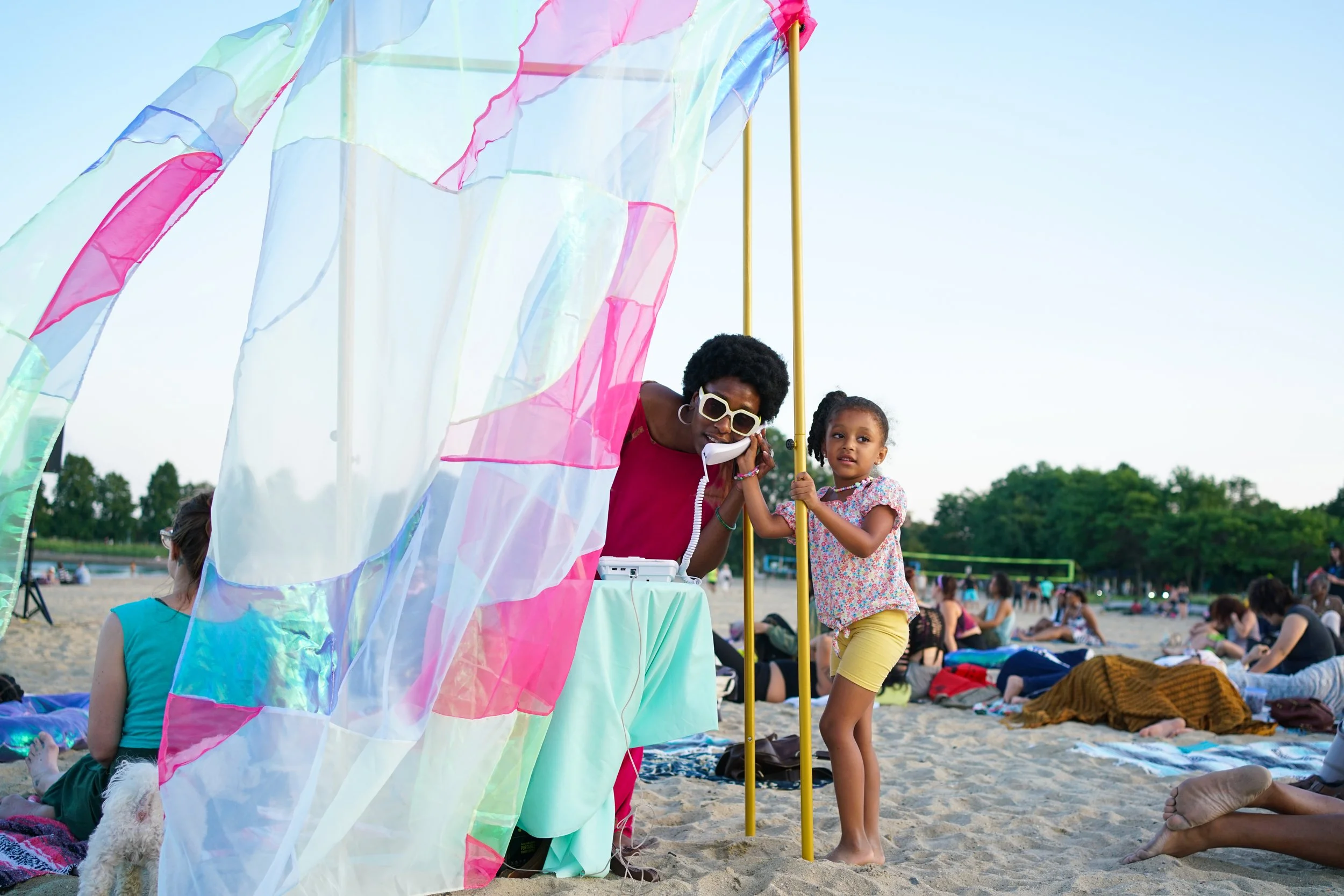
Dream Portal Phone Booth. Photograph by Nohemi Rodriguez.
Much of bi’s work invokes this sense of community. In 2023, she brought that community mindset into a new arena: the realm of infrastructure.
Tired of traditional methods of civic engagement in which cities approach communities from the top down, bi and Azaglo, with the help of DS4SI, turned the system on its head.
“How much would it change our neighborhoods if community members could propose directly to city government, and if city government actually cared to listen?” bi asked.
Together, they built the Department of Public Imagination, a fictional, bureaucratic branch of the government that collects the hopes and dreams of its citizens.
Picture a version of the DMV where you’re listening to your neighbors’ hopes instead of their complaints about the long line. In this department, you’re not blinking into harsh, fluorescent lighting, but are surrounded by whimsical objects and dreamy colors. Instead of filling out endless paperwork, you wait for your hopes and dreams to be notarized.
Anything can create a dream. Maybe it’s the telephone booth where participants can listen to the wishes of their community. Perhaps it’s the tactile artifacts, ranging from a sink faucet to 3D printed fruit, ready to spark inspiration. For some, the simple act of being asked is enough.
Other times, the engagement conjures up a dream participants didn’t even know they had.
“The part of your brain that is engaged when you remember something, is the same part of your brain that is used for imagining,” bi said. “What happens when we have a space to dream together?”
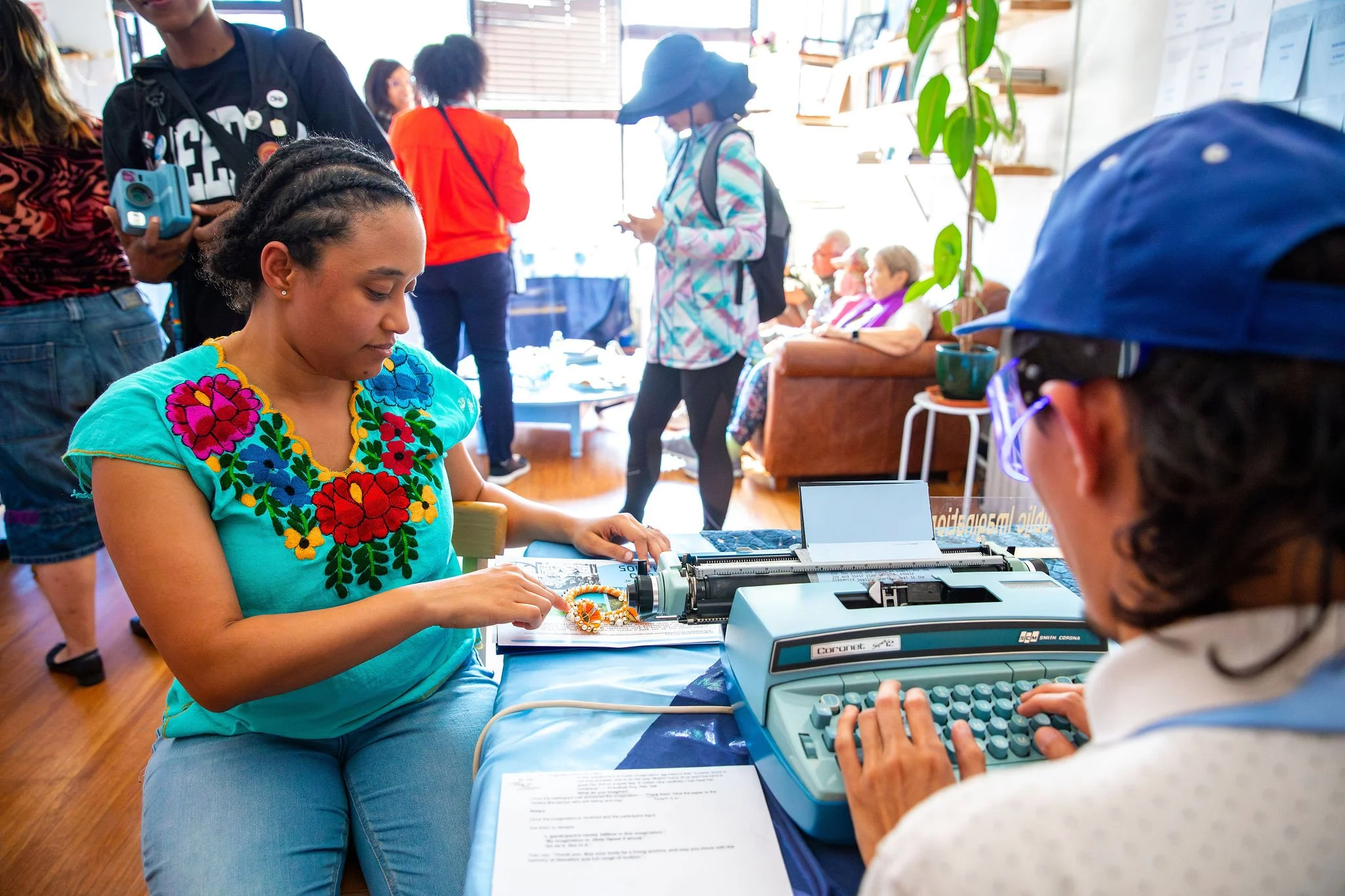
Department of Public Imagination. Photograph by Lauren Miller.
Like many of her other works, bi’s Accelerator project will offer reflection and ritual, and space to connect memory and imagination.
It will also be the third iteration of the previous project, Float. Composed of sturdy bamboo and gauzy fabrics, Float is an installation that, as its name implies, drifts amongst the waves.
“The piece really comes out of not having access to community and rituals for grief during the COVID pandemic,” bi said. “I found a lot of solace and support in the ocean, and started having these visions of creating this floating structure.”
Only after making the first iteration did bi learn about the Ghost Festival in Taiwan.
At the Ghost Festival, similarly fashioned bamboo structures are set out to sea as an offering for ancestors. To bi, this was a sign from her own ancestors, and the dreams they had for her future.
“I'm hoping it opens up space for thinking about your own relationship to the water,” bi said. “That it’s a space for remembering, connecting, and giving gratitude to ancestors, while also thinking about the future and what they had dreamed for you.”
On August 10th, Bostonians will be able to join bi in launching the floating installation on the ocean, which will be anchored at Fox Point until September 11th.
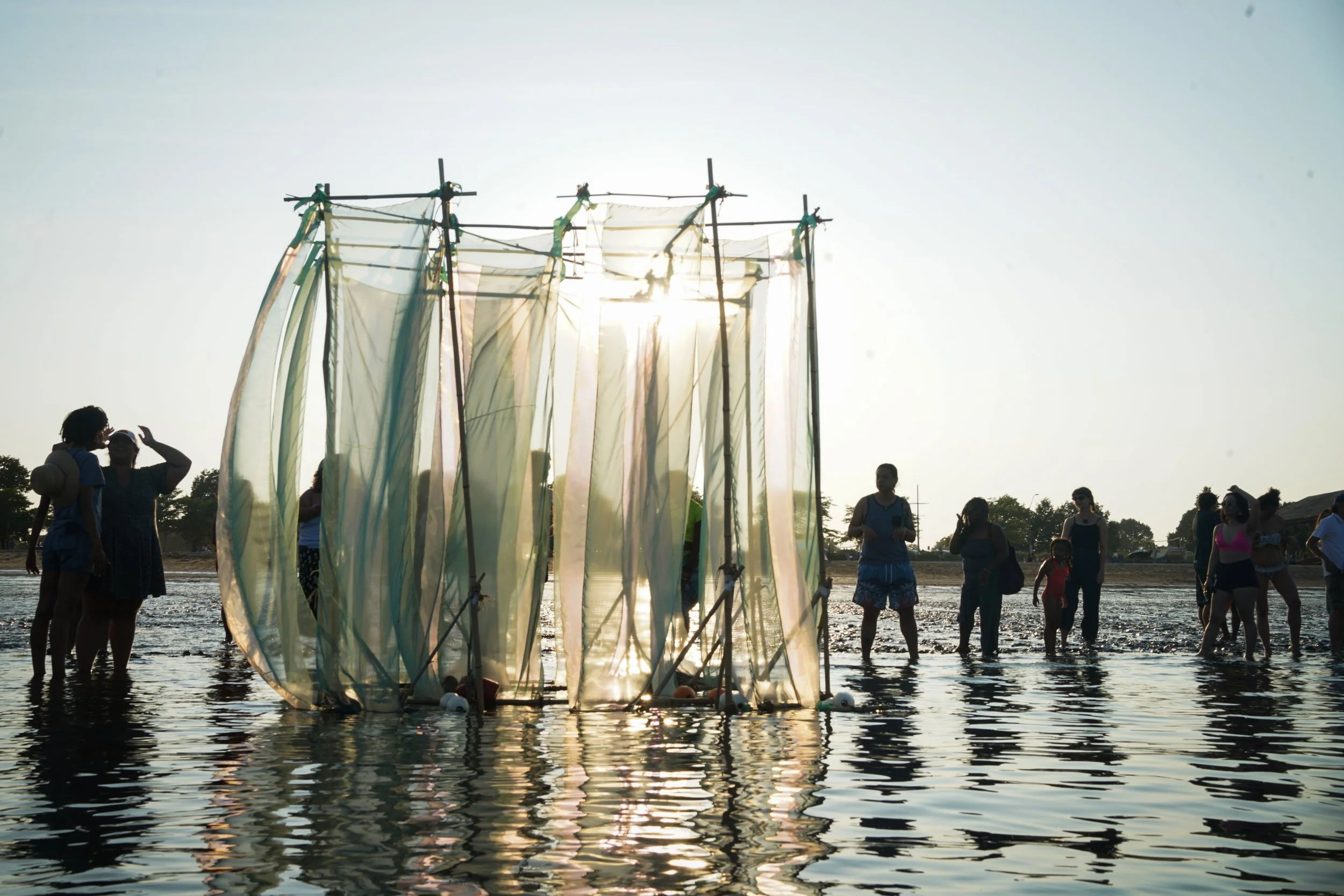
Float. Image by Nohemi Rodriguez.
Find more of bi’s work at crystal-bi.com.
Written by Nataleigh Noble, Communications Assistant at the Boston Public Art Triennial.
