
Jane Marsching
Accelerator Cohort 8 Artist Spotlight
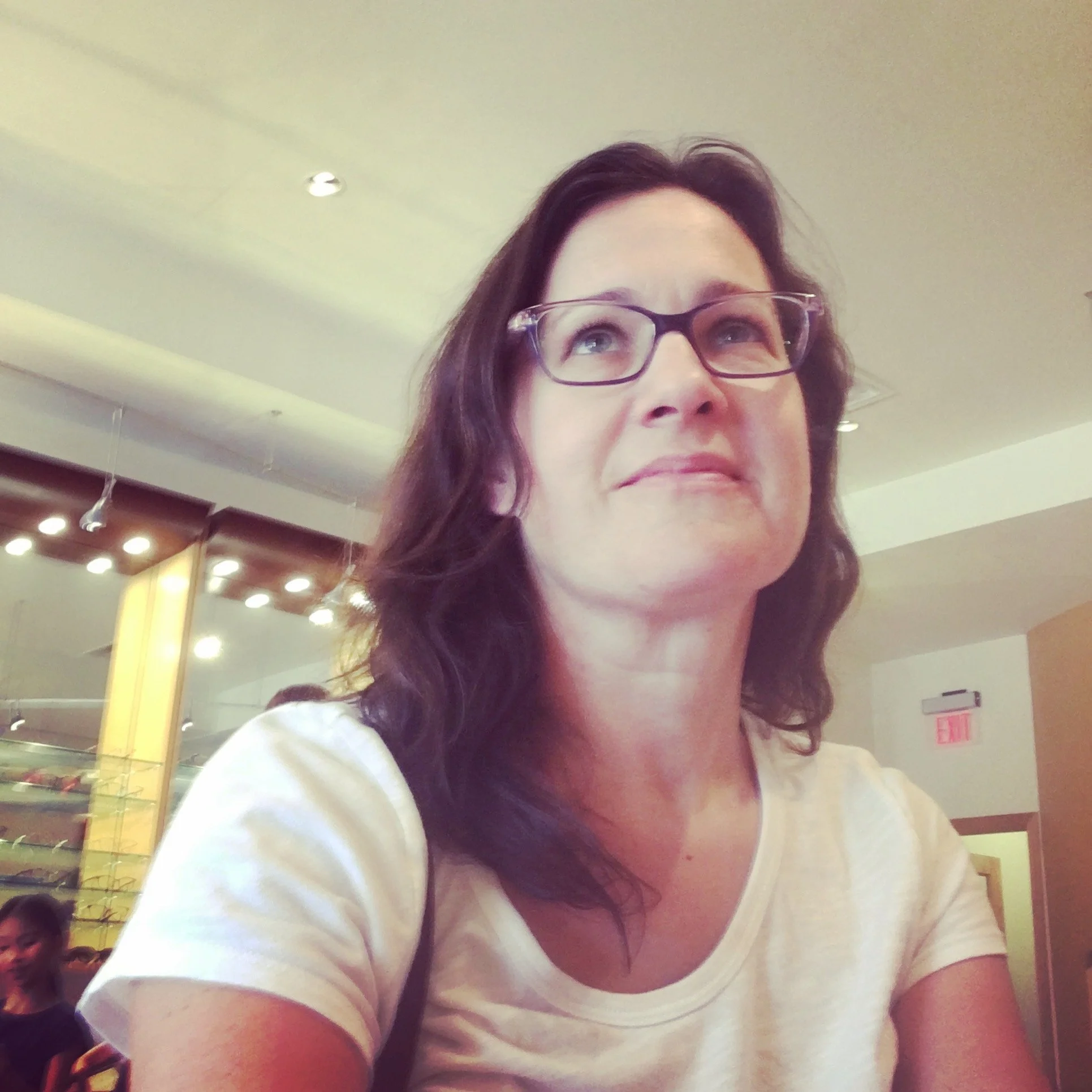
Over the last ten years, Hyde Park has lost 13 acres of tree canopy. Although the neighborhood is home to several lush green spaces and urban wilds, it experienced a higher net loss than any other area in Boston. In response, local artist, MassArt professor, and Hyde Park resident Jane Marsching is taking action through public art.
“Trees are being cut down at a faster rate than are being planted,” Marsching said. “Neighborhoods have experienced historic marginalization, and environmental justice communities have fewer trees than other parts of Hyde Park.”
Tree canopy, the top layer of branches and leaves that cover the ground, offers more than an aesthetic backdrop; it directly impacts neighborhood health. A bountiful tree canopy provides shade, cooler and cleaner air, and is linked to many positive health benefits for its residents.
In historically segregated cities such as Boston, tree canopy is often unequally distributed. Even the distance from one street to the next can tell two strikingly different stories. Through her Accelerator project, Marsching will highlight the environmental injustices that too often go unseen, and give voice to the trees that go unheard.
While Marsching has spent years creating artistic worlds through sculpture, photography, and multimedia, it wasn’t until a digital trip to the North Pole that she found her passion for environmental justice.
In 2002, the National Oceanic Atmospheric Administration deployed a webcam that took photos of the North Pole every few hours. The photos reported back meltwater pools, melted water from glaciers and ice sheets. As Marsching watched the meltwater appear and disappear, what began as paranormal research quickly turned into something else.
“It felt very alive,” Marsching said.
This idea of nature as a living, sentient being is central to much of the artist’s work.
“I do think trees have agency, trees are sentient beings,” Marsching said. “Their intelligence is different than ours, one that we don't fully understand.”
Through her ongoing project, The Urban Tree Oracle, Marsching encourages others to explore their connection with trees. In order to introduce participants to trees, she must first know them herself.
“I don't think you can really get to know a tree until you see what their life is like through four seasons, " Marsching said.
First, she spends a year with a specific tree. Then, through community gatherings and written scores, Marsching guides participants to connect with a tree of the same species, not as a scientific subject, but as a new friend.
“All of these qualities that the trees in the project have is like a suitcase of qualities that we need to be climate resilient as a community,” Marsching said. ”And so if we can learn from the trees, then we also can be resilient like trees.”
A gathering by an oak tree, for example, would focus on endurance. Inspired by the oak tree’s durable leaves, strong stature, and lengthy lifespan, participants will learn about and imagine the tree’s hardy existence.
Participants also have the opportunity to create oracle cards for the trees with homemade tree inks. Now somewhat of a trendy hobby, creating inks from trees is a practice that Marsching has engaged in for years, back when the only recipes available were medieval tinctures of dung and mead.
“I mean, the oldest Bibles and whatnot are written in ink made from oak trees. Tree time is so long.” the artist said. “There's trees who were alive when we signed the Declaration of Independence, and who’ve watched history for 300 years.”
Through these tree inks, and a font created from the branches of a dying hemlock tree, the trees now have a direct line of communication to humans—a voice.
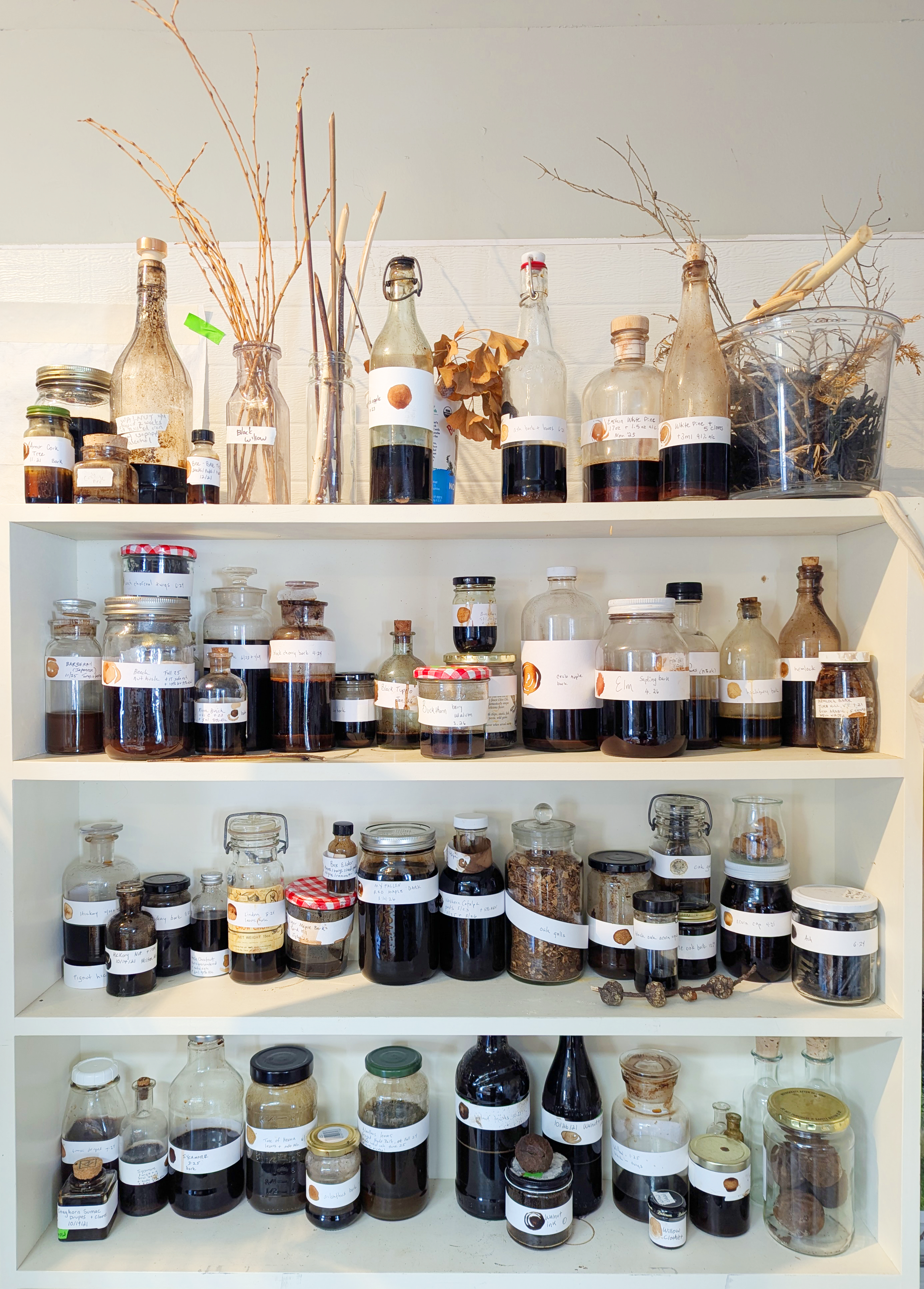
Marsching’s shelf of tree inks.
Image courtesy of the artist.
Marsching’s Accelerator project, Tree Care, will have similarly fashioned workshops to The Urban Tree Oracle, but will focus on advocacy. Marsching is also working with several local organizations that are already planting, protecting, and advocating for trees in the area.
“Part of my project is trying to shine a spotlight on these overlooked aspects of the natural world that are present in our everyday lives,” Marsching said. “My suggestion is not to think about going to some other nature, somewhere else, but to open one's eyes to what is actually here.”
Sowing this kind of change can take time, but Tree Care is combatting injustice on multiple fronts. In addition to community gatherings and local collaboration, the project will plant new trees, provide information about those already in the neighborhood, and even include a wheelbarrow planting printing press.
Instead of planting trees in the middle of the neighborhood without a second thought, Tree Care invests time in the people and plants of Hyde Park. It offers residents— flora and fauna alike— the opportunity to strengthen their community and see a more sustainable future.
“It is a project that uplifts and amplifies,” Marsching said. “And creates, I think, a beautiful lens to look at this community care work that people are doing, that isn't always appreciated or understood.”
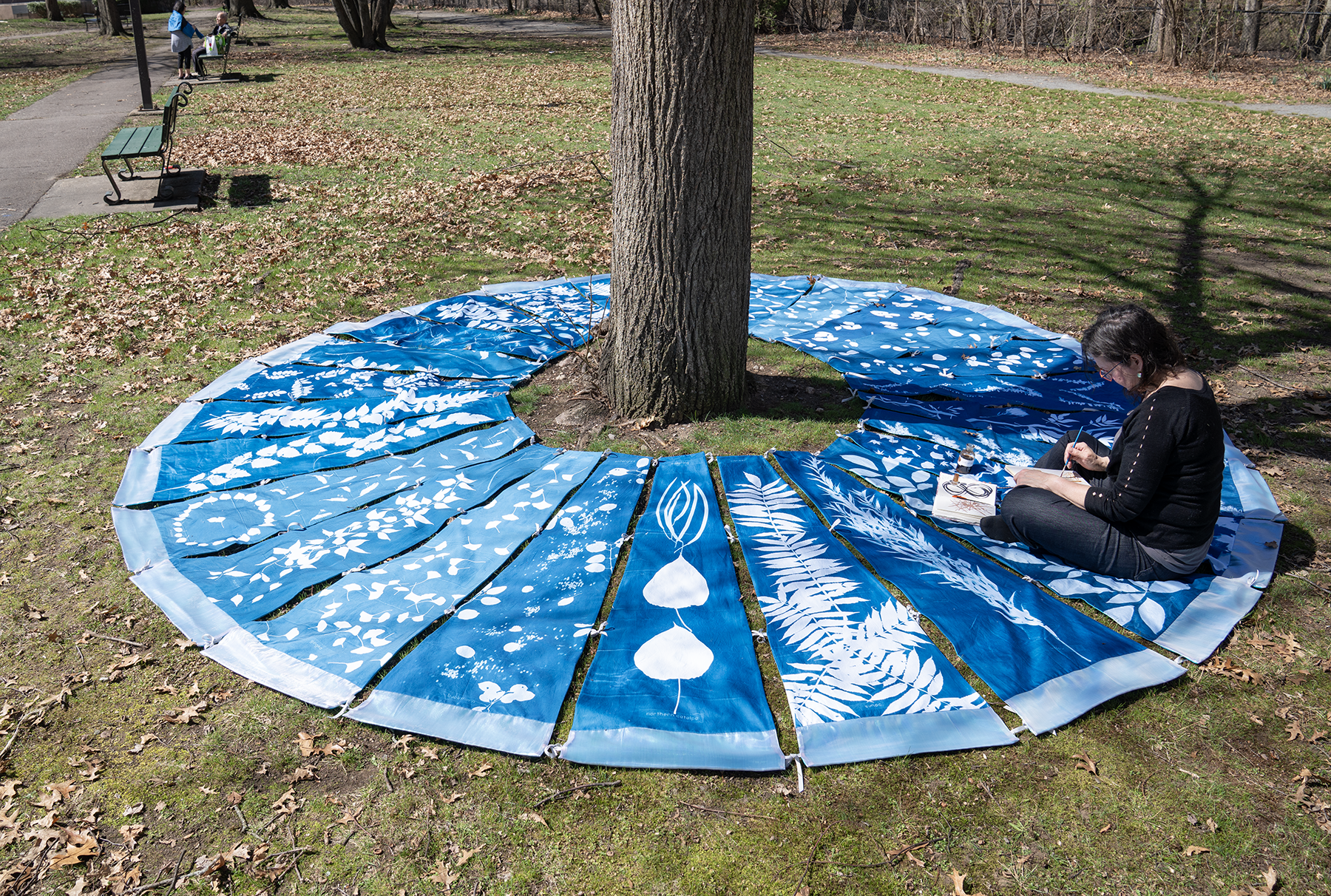
A groundcloth that will be used for gatherings.
Image courtesy of the artist.
Find more of Marschings’s work at www.janemarsching.com or @studiojane on Instagram.
Written by Nataleigh Noble, Communications Assistant at the Boston Public Art Triennial.
