
Heather Kapplow
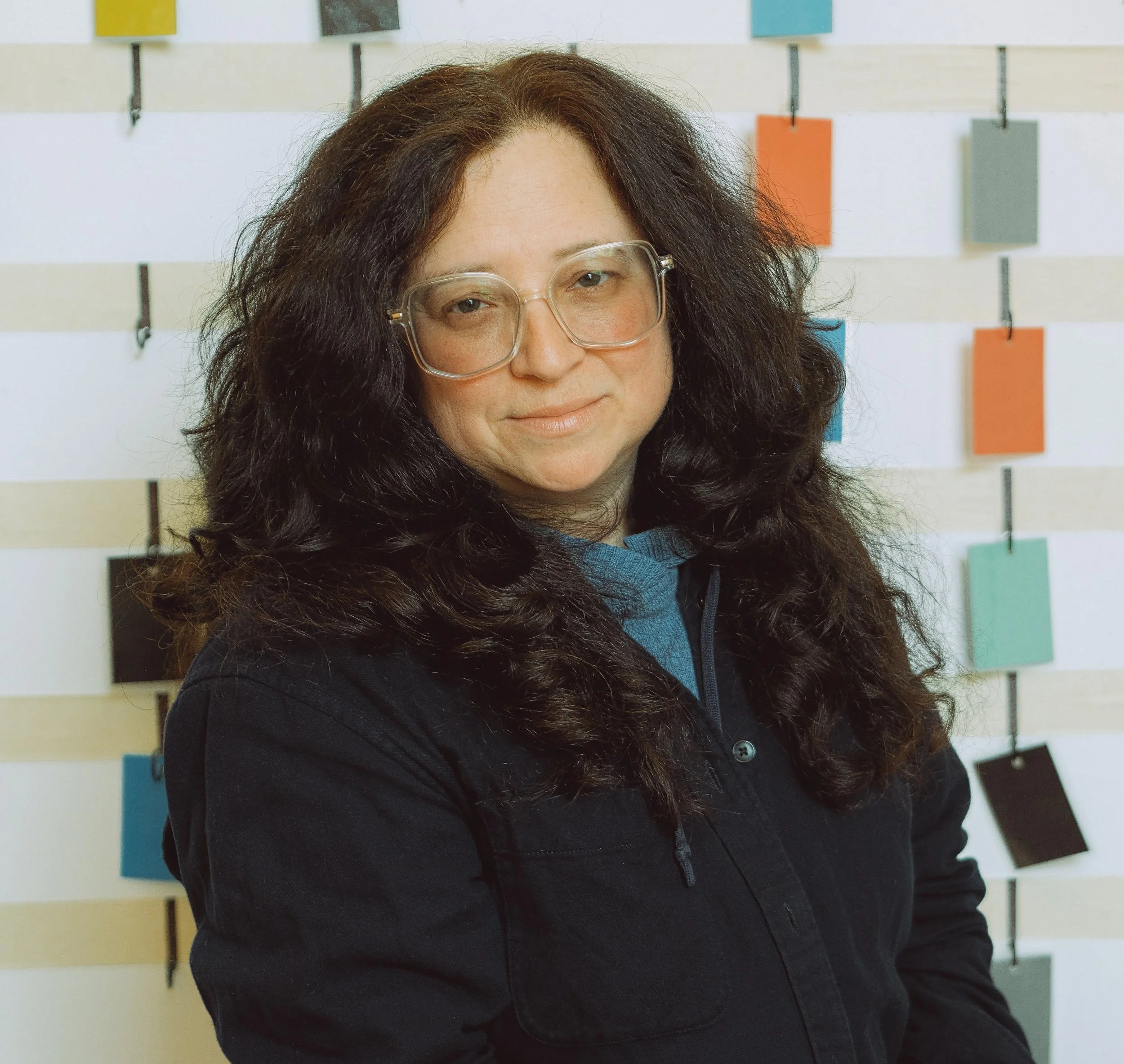
Photograph by Feda Eid.
Artist Heather Kapplow was standing in the checkout line at Trader Joe’s, waiting to buy a few limes, when a woman walked in and asked the cashier for validation.
Limes and other grocery items forgotten, Heather was immediately intrigued.
“Can you really validate people at the checkout line?” Heather wanted to know, imagining cashiers handing out personal affirmations with every bag they packed. The possibility that the woman was asking about parking hadn’t yet occurred to the artist.
“Sure I can validate you,” the grocer joked. “I bet you’re a great driver.” But Heather wasn’t worried about the mix-up; an idea was forming.
In Heather’s world, inspiration can strike at any moment. The cheering of the crowd at a concert. A worn down concession booth. A misunderstanding in the grocery line at Trader Joe’s.
“A slight shift in your perspective can reconfigure everything you think is real. And it doesn't take a lot,” Heather said. “Let's just move three steps to the left, and then you're seeing the world differently.”
Many of Heather’s projects start with a word. After finding a piece of language that lands funny, the artist mentally tosses it around, maybe writes it down on an index card with a bold marker, and sits with it. One single word can spark a whole world.
On that fateful morning at Trader Joe’s, the word happened to be “validate”.
Set in a future where tyranny was vanquished through being vulnerable with one another, Validated became a project that allowed participants to express feelings of underappreciation, and become affirmed in their emotions. While Heather officiated the experience, the true action of validation occurred through a peer-to-peer exchange.
“The real power of the piece was that it's not about someone in a position of authority approving you, whether it's the validation officer or St Pete,” Heather said. “It's about being able to support each other as equal members of a community.”
As a conceptual artist, Heather often creates new realities for participants to step into. A wall can be a portal. A fake government department can eradicate tyranny. Inflatable gates can guard heaven on earth.
Other projects of Heather’s start with a question. After hitting a wall with a sociological or ethical query, the artist will move three steps to the left, and try again.
Take, for example, the climate crisis.
Both a present challenge and looming threat, global warming provides a constant moral dilemma. The landfills are full of unethically-produced clothing, but sustainable clothes are expensive. Taking public transportation is environmentally friendly, yet inconvenient. AI uses significant water consumption, but is now integrated into daily life.
With so many competing factors, it can be difficult to balance individual responsibility with personal limitations.
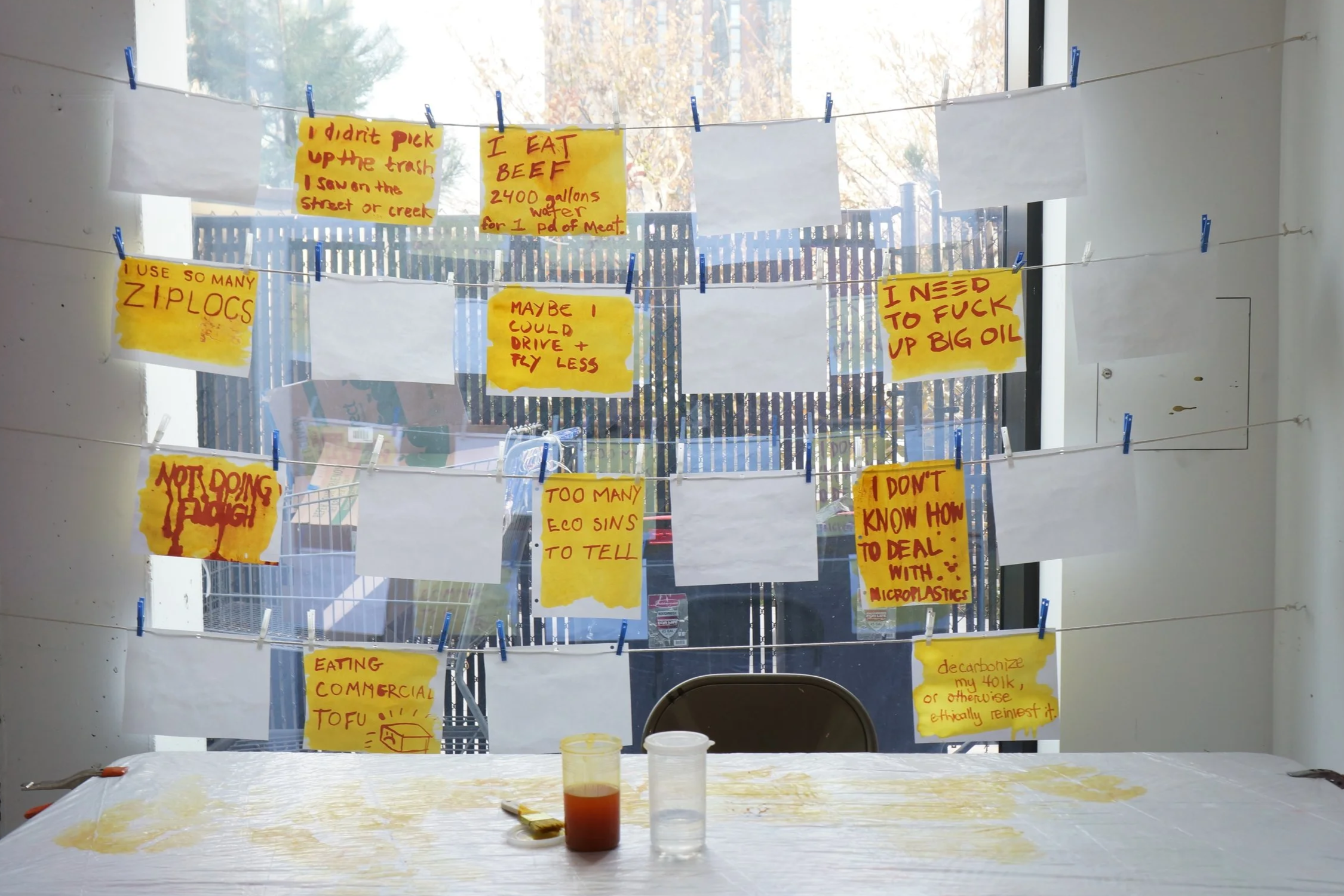
Spilling Toxic Tea, Image courtesy of the artist.
At a queer eco-performance festival, Heather’s project Spilling Toxic Tea gave attendees some breathing room. Participants wrote their “dirty little eco-secrets” in invisible ink that would then anonymously develop over time.
From “I eat meat” to “my crippling desire to use Chat GPT”, each secret helped visitors meet each other where they were at.
“It is about us seeing each other's weaknesses and failures,” Heather said, “I think it's really useful for people to see the different scales that their peers or their community think about these things at.”
The project didn’t propose a solution. It didn’t absolve participants of their guilt. It did, however, shine a light on the shared reality of climate change.
Tackling societal issues in a cheeky manner is a hallmark of these projects. Heather hopes that by amping up the playfulness, participants will be more willing to embrace vulnerability. Maybe, if people feel less burdened, it will be easier to imagine new systems that dismantle oppression.
“Uplifting people just can't hurt,” Heather said. “Not only can it just not hurt for them individually, but it also can't hurt for us as a culture to have more spaces of reassurance that we're not terrible, horrible creatures.”
This theme of reassurance is interwoven throughout much of Heather’s work.
In 2012, Heather, armed with index cards and a typewriter, stood in a soon-to-be torn down concession booth by the beach. Instead of handing out the typical hotdogs, fries, and other deliciously greasy fare, this concession stand’s wares were more literal: index cards filled with the artist’s own past compromises.
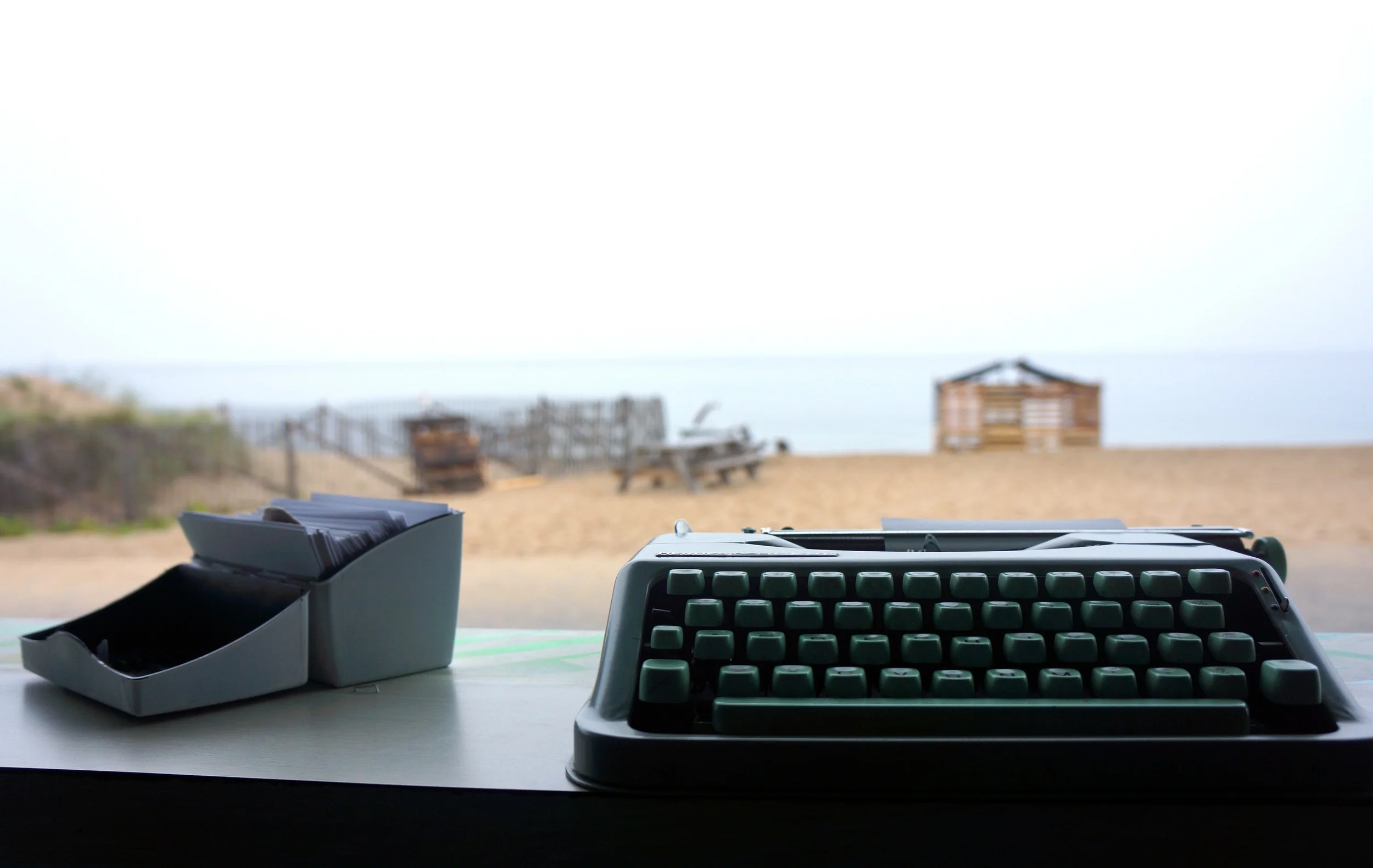
Concessions, Image courtesy of the artist.
The public sifted through Concessions, where they found admissions like “agreed not to be in love”. Visitors could ask any question they’d like, no matter how vulnerable. To take a card home, they just had to pay a small price: leave a concession of their own behind. At the end of the project, Heather read the cards aloud as an ode to human failure, before tossing them to the sea.
“We were sharing with one another our weaknesses and holding them together in an acknowledgement that we all have them,” Heather said. “ We just have to let them go into the wind.”
Heather’s next participatory art project will once again explore a world in which vulnerability and openness are rewarded. Better Angels, commissioned by The Triennial, will pop up throughout Boston’s own backyard, and offer unconditional understanding to all who pass by.
Surrounded by inflatable gates, towering clouds, and whimsical angels, Bostonians will take three steps to the left, together.
Find more of Kapplow’s work at www.heatherkapplow.com or @heather_kapplow on Instagram.
Written by Nataleigh Noble, Communications Assistant at the Boston Public Art Triennial.
