
Lena Noni Browne on Caribbean collectivism and communal creativity
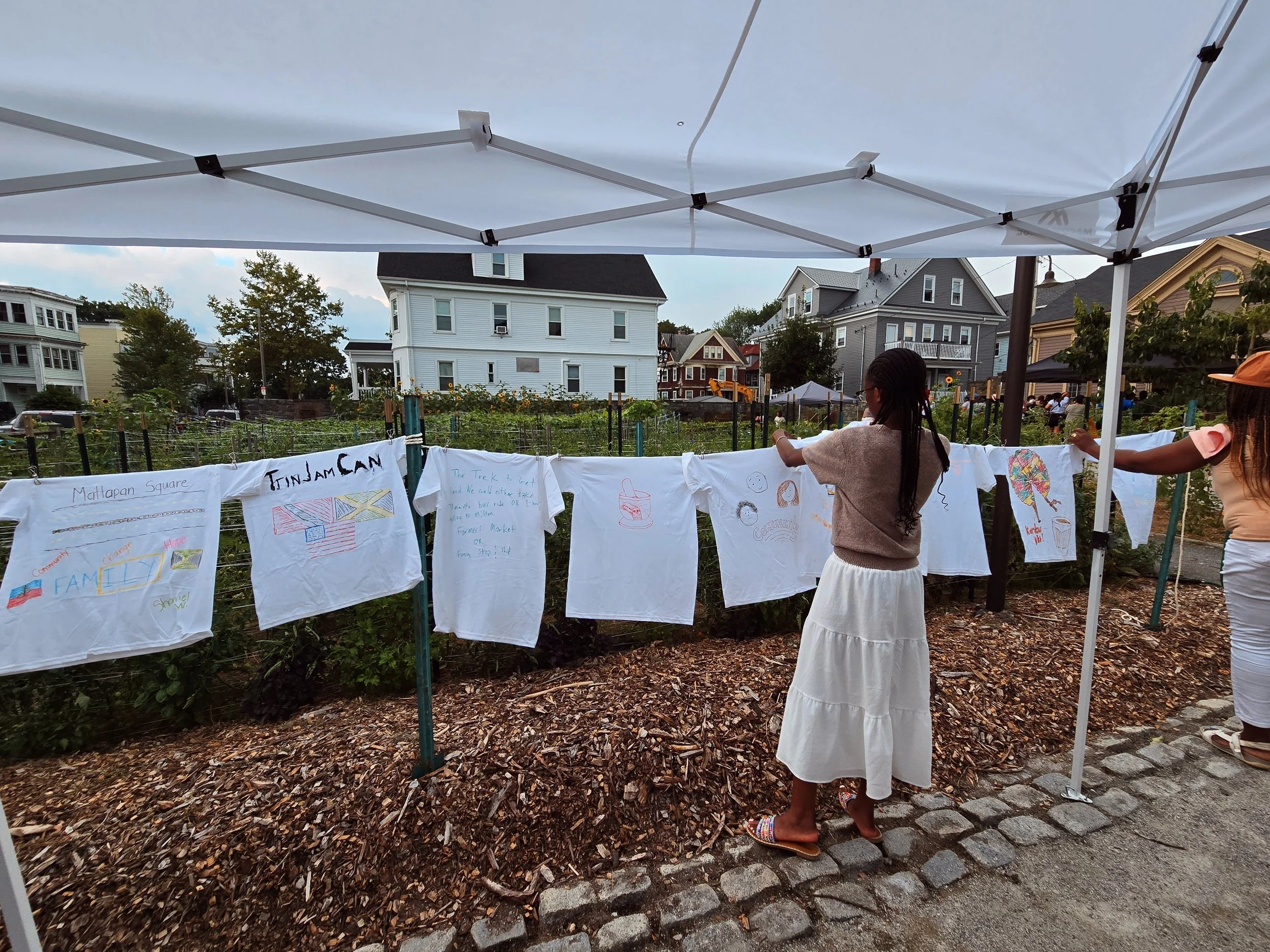
Image courtesy of the artist.
Lena Noni Browne, local artist, writer, and lifelong Bostonian, has an affinity for third places.
“I just love being in spaces with other people that I may not have met before, and can form those connections with,” Browne said.
Third places are social settings outside of the home and workplace that build a sense of belonging within a community. Browne attributes her love of these communal environments to her Caribbean heritage.
“Caribbean culture is very collectivist, you know, it's very loud and lively,” Browne said. “It's such a reflection of love.”
As Mattapan local, Browne has fond memories of spending time outside, running into neighbors, and celebrating shared values with other Caribbean community members. As she got older, however, Browne noticed a change. The sense of community, an integral part of her home, was ebbing away.
A number of factors could be responsible for this lack of connection. The lingering effects of the pandemic. New technology prompting higher levels of individualism. Or, Browne’s biggest concern: isolation from a lack of communal spaces.
“Boston’s been a very siloed city,” Browne said. “It's not always easy to interact and interconnect. You don’t always know that other communities exist.”
Browne is someone who regularly invests time in the people around her. Starting her career in youth theatre and at the nonprofit 826 Boston, she’s expanded her work to include Bean and Barter Market, a mutual aid market that practices alternative economies.
At Bean and Barter Market, money isn’t the only currency. Pre-loved goods, handmade items, and a want to help others hold equal value. The market focuses on more than the exchange of goods; complete with a cozy corner for a quiet moment, an intriguing conversation, or a quick cat nap, it encourages that community care that Browne grew up amongst.
It wasn’t until working on an autoethnographic college assignment, in which Browne had to dig into her own cultural roots, that she realized just how many people craved these spaces.
“I talked to other people, friends, family, about our desires to have more third spaces,” Browne said. “To revitalize more of what feels like home for us in places that don't always feel like home.”
Researching the experience of the Mattapan community made it clear: her neighbors were longing for connection. Thus, Air Out Your Laundry was born.
An ongoing series of events, Air Out Your Laundry creates a safe, welcoming, and open space for Caribbean Bostonians to gather and creatively inspire social change in their neighborhoods.
The name is a take on the popular phrase “airing out dirty laundry”, which Browne says is in line with the individualism she sees in Western environments. By flipping the phrase from a negative to a positive, she removes the stigma that often accompanies vulnerability.
“I noticed that in America there is a dominant narrative of each person for themselves,” Browne said. “So, Air Out Your Laundry is letting people know what you’re going through, if it's something other people can help you engage with. “
Each gathering starts with a community circle to ensure attendees feel comfortable with one another. Together, neighbors chat, laugh, and get to know each other before engaging in reflections about their shared backgrounds.
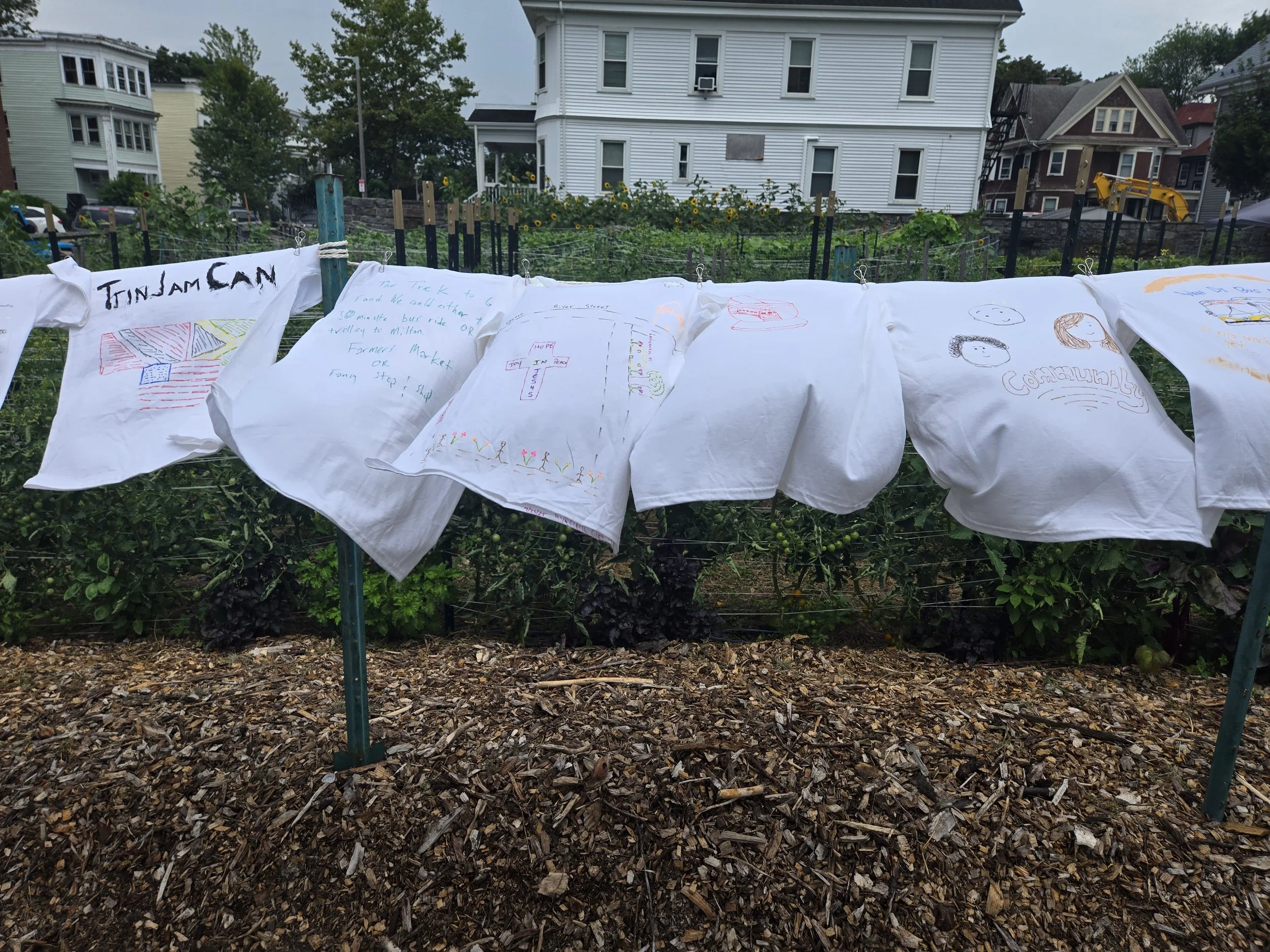
Image courtesy of the artist.
At Air Out Your Laundry, everyone can be an artist. When Browne was first crafting the project, she knew she wanted to give others the chance to turn their experiences into an art installation.
Inspired by the familiar Caribbean motif of backyard laundry lines hanging overhead, the first group of participants contributed to an installation strung across the Urban Farming Institute. After sharing and connecting over Caribbean values, attendees painted T-shirts with their lived experiences, frustrations, hopes, and dreams for a vibrant, culturally relevant, and equitable neighborhood.
“I’ve always been a creative soul, but growing up, I didn’t necessarily feel encouraged to be or see myself as an artist,” Browne said. “I hope to affirm that everyone is an artist and give people a way to express their stories in something creative and tangible.”
Browne hopes participants are able to tap into their emotional and artistic intuition, regardless of their experience level. Through reflective conversation, collective vulnerability, and civic creativity, she believes that Caribbean communities can experience collective joy and healing, while further memorializing their voices and needs as a cultural community.
Written by Nataleigh Noble, Communications Assistant at the Boston Public Art Triennial.
