
Accelerator Cohort 8 Artist Spotlight
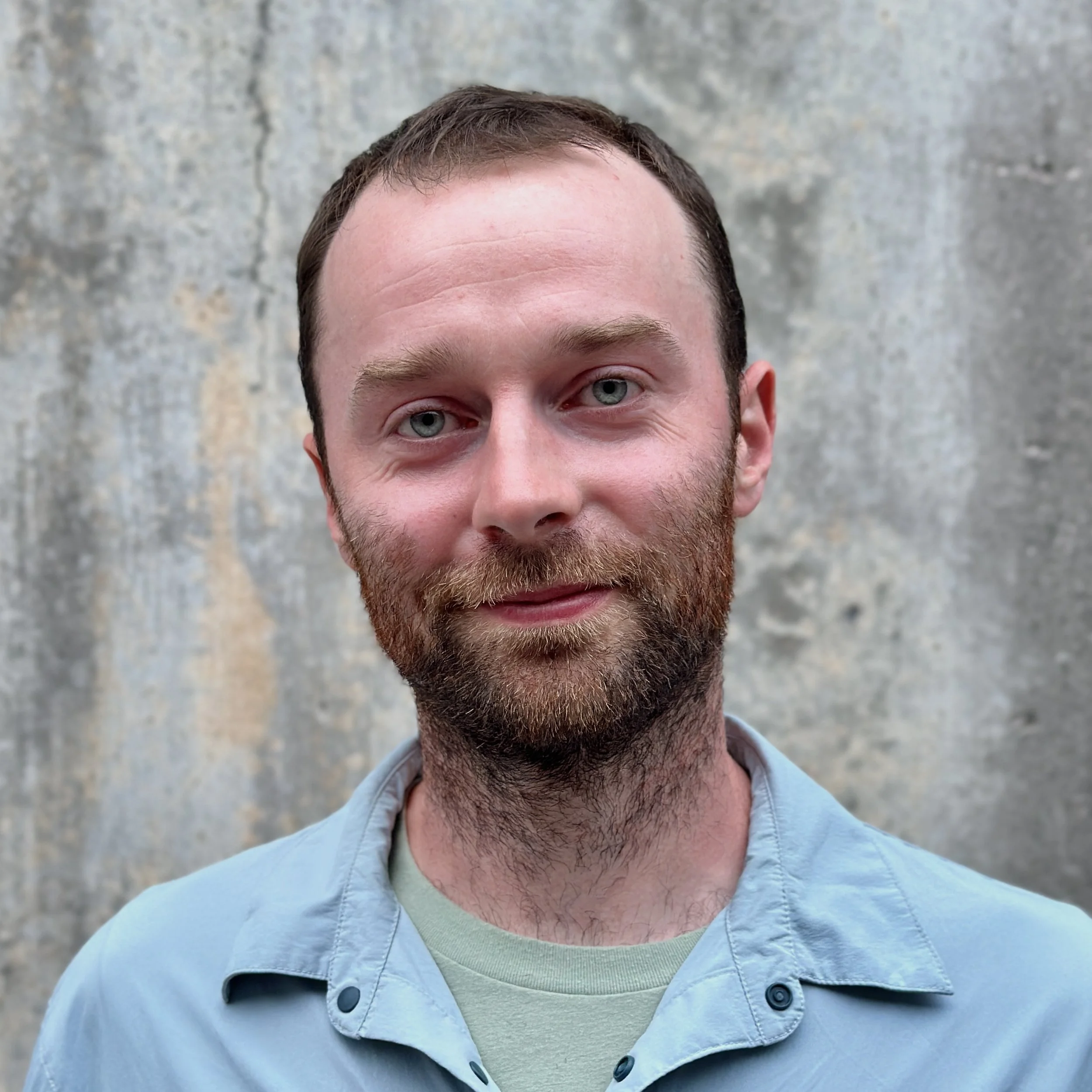
Have you ever wondered what lies at the intersection of everyday objects and unexpected oddities?
Look no further than Garrett Gould’s artwork. A local sculptor, ICA Watershed project manager and MassArt professor, Gould reimagines the function of the mundane. Through the Public Art Accelerator, the Triennial’s skill-building program that supports local artists in transforming Boston’s neighborhoods through contemporary art, Gould is taking his work from its typical “huggable scale” to a much larger, more public dimension.
As a true New Englander, Gould’s artistic career began with an elementary school assignment to sketch a field guide of birds in the region.
“I spent so much time on my bird drawing, and it was the first good grade that I got in school,” Gould said. “That was the first time where I was like, ‘oh, I think I could do this’.”
These days, Gould focuses on sculptures that prompt a double-take.
“I like it when you look at something, and then you leave, and then you think about it, and you're like, ‘wait a second’?” Gould said. “That whole negotiation in your mind, where you're trying to reconcile a memory with your perception.”
Gould often makes lists of objects he touches every day and objects he’s rarely encountered. Take, for example, a bread tag and a lobster claw.
Through bright, whimsical and sometimes humorous constructions of unassuming items, every creation becomes both “like and unlike itself”.
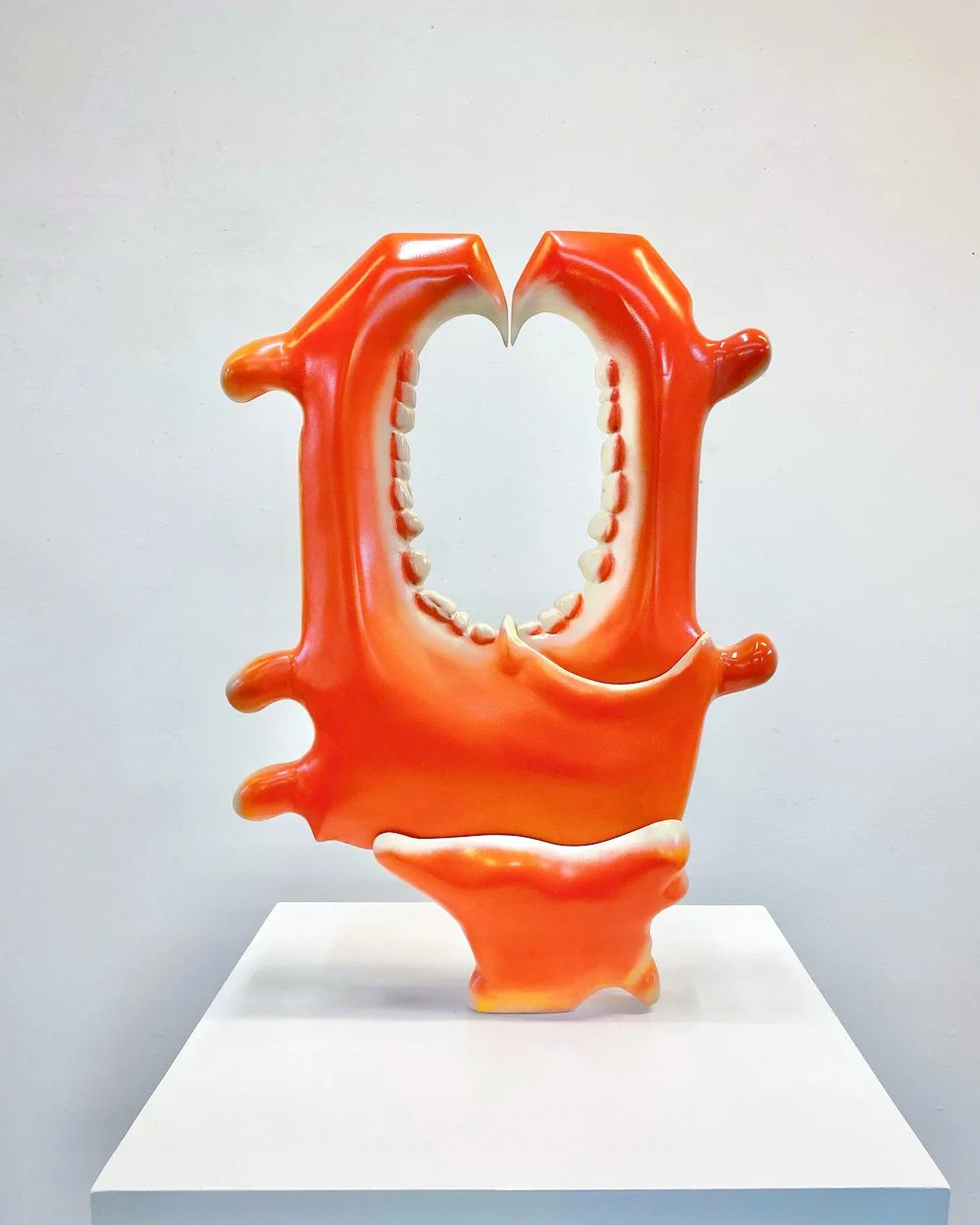
Garrett Gould
Trophy, 2023
Polychromed poplar, varnish
Image courtesy of the artist
Trophy, a lobster claw made of polychromed poplar and varnish, emulates the plastic tag found on a package of bread. Two objects, one from the sea and one entirely manmade, now form an unlikely connection.
Trophy also happens to be the first work that made Gould feel like a true sculptor. The ritual of bringing the materials, tools, and space together made everything click into place.
“For the very first time, I was like, ‘wow, I'm a sculptor’,” Gould said. “Just doing this completely reductive exercise of discovery.”
As a self-proclaimed “knick-knack person”, Gould appreciates overlooked objects and encourages a deeper reflection on our relationships with the tactile side of life.
Think of an old spatula that you refuse to throw away because nothing else flips an egg quite the same, the comb you use every morning, or the ceramic fortune cookie that sits on Gould’s desk. All objects, no matter how simple, have a history.
“As a sculptor, the body is such a starting point and an end point for so many forms,” Gould said. “For people who might not engage with art on a daily or intrinsic level, they might take for granted the things that they really care about on a purely tactile level.”
While listmaking, drawing, and experimenting with different materials are included in Gould’s process, he always returns to woodworking.
Gould’s woodworking roots run deep. As the son of an industrial designer and grandson of a homebuilder, 3D drawing and carving came naturally. Growing up, this work didn’t seem like artistry; now, almost every piece first takes form as a wooden model.
“There's definitely a familiarity and a history I feel like I'm always in communication with,” Gould said. “The material is so alive in that way. And there's never a point where it becomes un-editable.”
The dialogue between Gould’s hands and the natural materials he worked with came easily; translating his ideas to an audience, however, did not.
Never feeling compelled to platform his own societal or historical commentary, Gould relied on hyperindividualistic stories and found objects that held personal meaning. So much so, that he struggled with creating entry points for onlookers to connect with his designs.
Until Gould’s wife started culinary school.
“Food was the center of gravity,” Gould said. “Food, for me, felt like that was a really great way to talk about history and society and ethnicity in a way that was universal, but also allowed space for other people to put their stories in.”
Suddenly, the kitchen transformed into a studio, and food took on a new form. A wreath, inspired by the thousands of pretzels that littered the counters. A bright green cucumber with nooks and crannies to explore. Strawberries, blueberries, and lemons gained new purposes.
“All of these things have many different avenues to go down,” Gould said. “They're this rotary, as it were, that people can walk around and then take it in another direction.”
These days, Gould doesn’t assign meaning for spectators; instead, he turns recognizable symbols on their heads and lets viewers fill in the rest.
This deliberate and pared down iconography keeps his art accessible. That directness invites everyone, from art connoisseurs to rookie admirers, to find an echo of their own experience in his sculptures. As he ventures into temporary public art, Gould hopes to inspire these types of reflections on a larger scale.
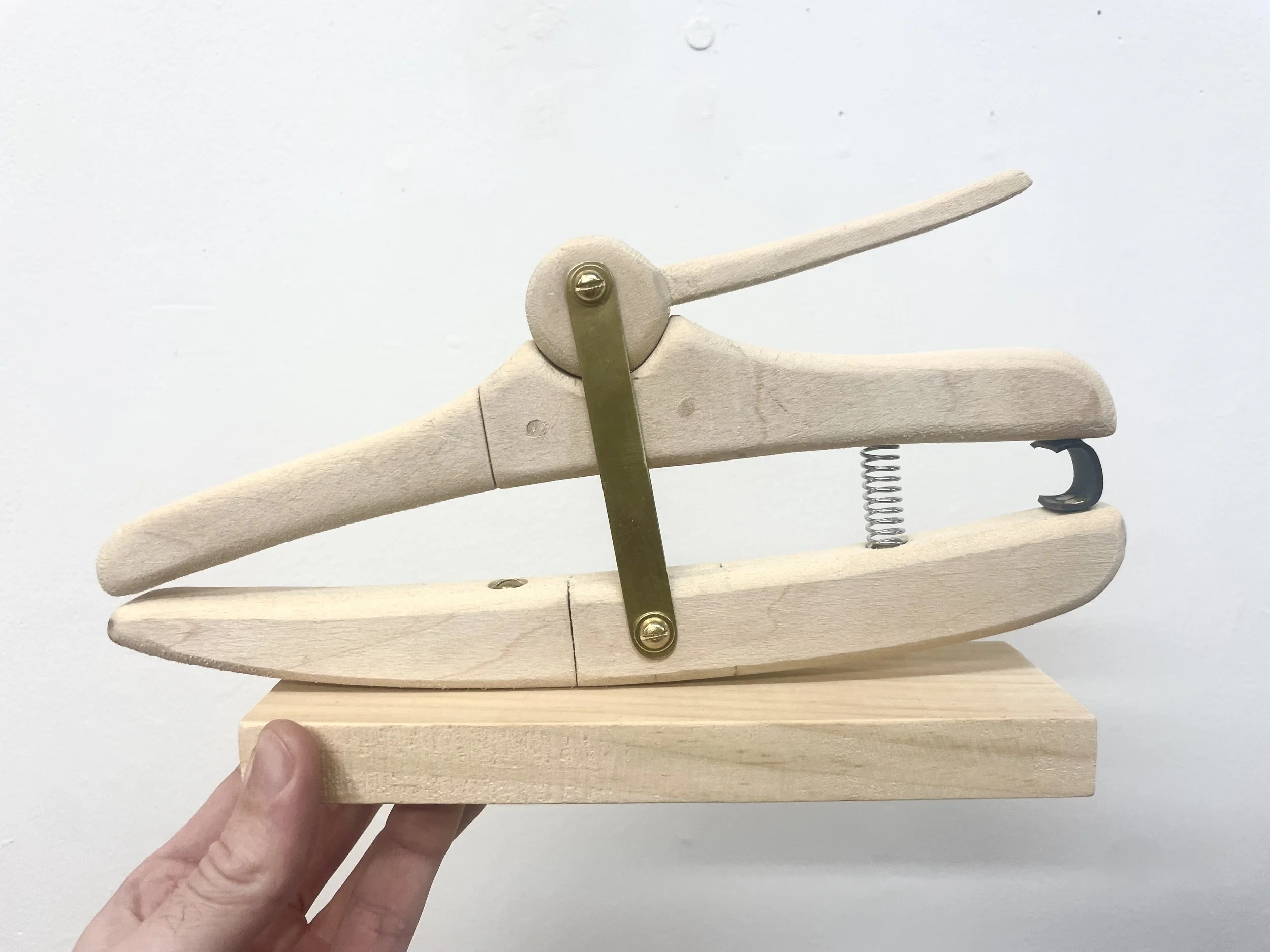
Garrett Gould
1:12 scale model of Accelerator Project
Image courtesy of the artist
“[The Accelerator] totally changed my perspective on the temporary,” Gould admitted. “It creates this beautiful interest feedback loop to always have people go back to public art.”
While Boston will have to wait to see Gould’s public art creation, we do know this: the sculpture is set to be interactive, and will center the success story of a local bird species. A fitting project for a career set in motion by a young artist’s avian field guide.
Find more of Gould’s work at garrett-gould.com or @24carotgould on Instagram.
Written by Nataleigh Noble, Communications Assistant at the Boston Public Art Triennial.
