
Lan Tuazon
Triennial Artist Spotlight
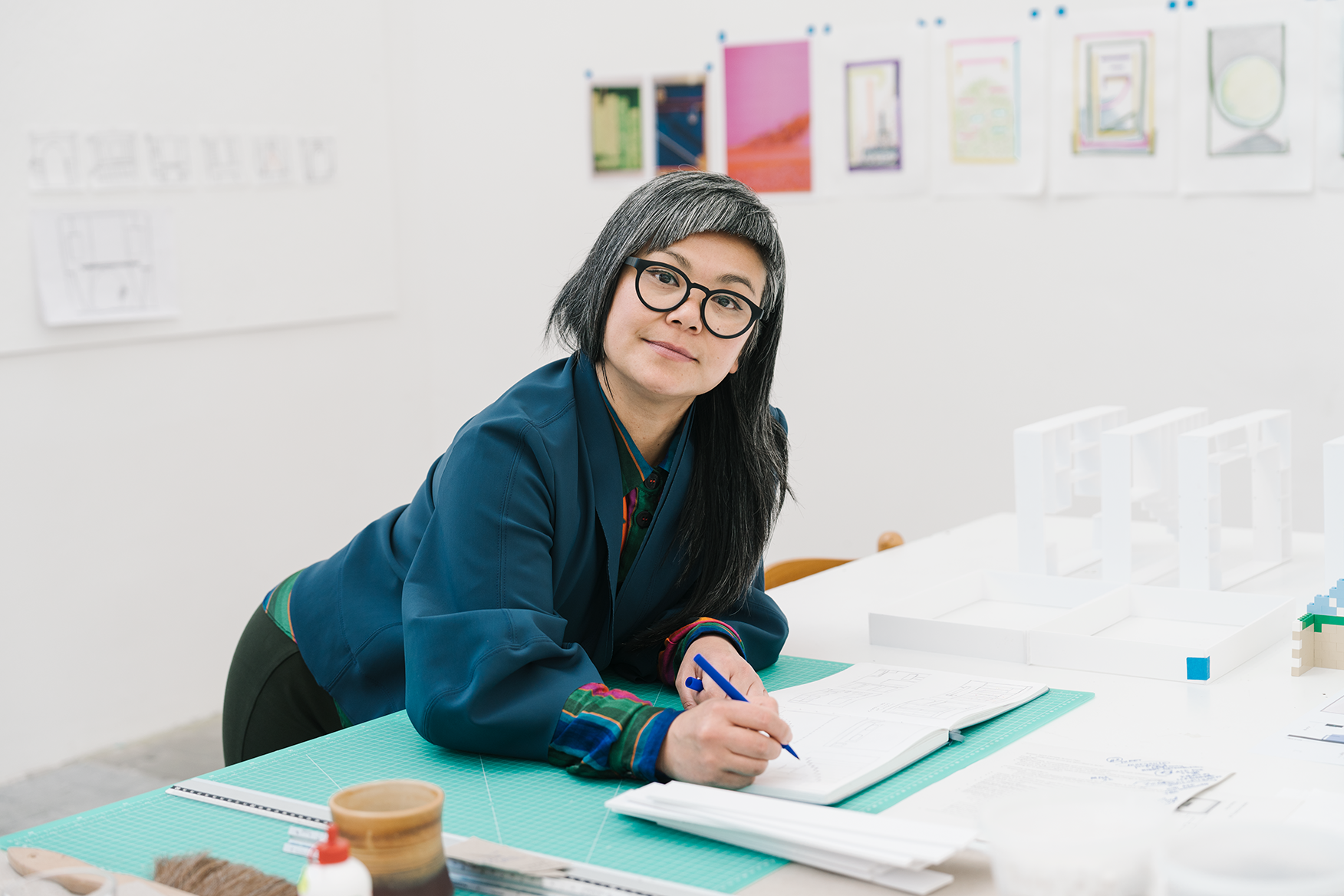
Portrait of Lan Tuazon, Photograph by Claudia Gori, courtesy of the American Academy in Rome, 2024.
In a city famed for its historical landmarks and metallic monuments, artist Lan Tuazon’s plastic-born artwork honors something different: collective action.
Matters of Consequence, newly installed at University of Massachusetts Boston (UMass), is bringing community collaboration to a commuter campus. Complete with an archway entrance, private seating, public study, and all embellished with vibrant custom-made plastic panels, the sculpture extends an invitation for students to enter and linger.
“I hope the students feel the sculpture belongs to them and settle in,” Tuazon said.
To some students, moving in may mean simply setting down their weighted bookbag. Others might stay for a study session. Better yet, they could host book drives, indoor picnics, or protests. Tuazon may have planted the seed of innovation, but it’s up to the students to decide what grows.
Private reflection, public space

St. Jerome in his studiolo, painted by Antonello da Messina.
The sculpture encourages learning by doing. Through an open call, the campus community will have the opportunity to put their own ideas into action and use the artwork.
Inspired by a painting of a 15th century “studiolo”, Matters of Consequence blurs the lines between the private and the public. The studiolo was a place of study, but through displays of gifts and treasures from royals, scholars and diplomats, was also a display of social network making the space an early version of the cabinet of curiosities we that know today as the museum.
“The studiolo is a complex Renaissance space that we don’t have, one that is openly private and publicly open” Tuazon explained.
Practice makes perfect
Tuazon hopes her sculpture will become a third place for students. Whereas designed spaces turn people into users, Matters of Consequence is a flexible space for social innovation and interaction where students can begin to discover who they are as a community.
This type of experimentation is central to the artist’s work. Instead of fearing design failures, Tuazon leaps headfirst into open possibilities. By calling her works “test sites”, a phrase coined by architect Mike Reynolds (innovator of the Earthship), her art becomes its own form of investigation.
Take the climate crisis, for example. While UMass may not solve global warming on a worldwide scale, they can explore how sustainable practices work within their community. Does a quarterly clothing swap help students limit their waste? Would a vegetarian recipe workshop help the student body eat a more plant-based diet? Are there other ways the campus can become more eco-friendly?
As a self-described systems builder, Tuazon isn’t trying to solve every injustice. The goal is simply to find new processes that replace harmful systems, one by one.
Originally created for an outdoor space and now relocated for a yearlong installation, Tuazon believes the sculpture has landed at the right spot. After all, what could be a better place for utopian experimentation than a university?
Naturalizing human culture
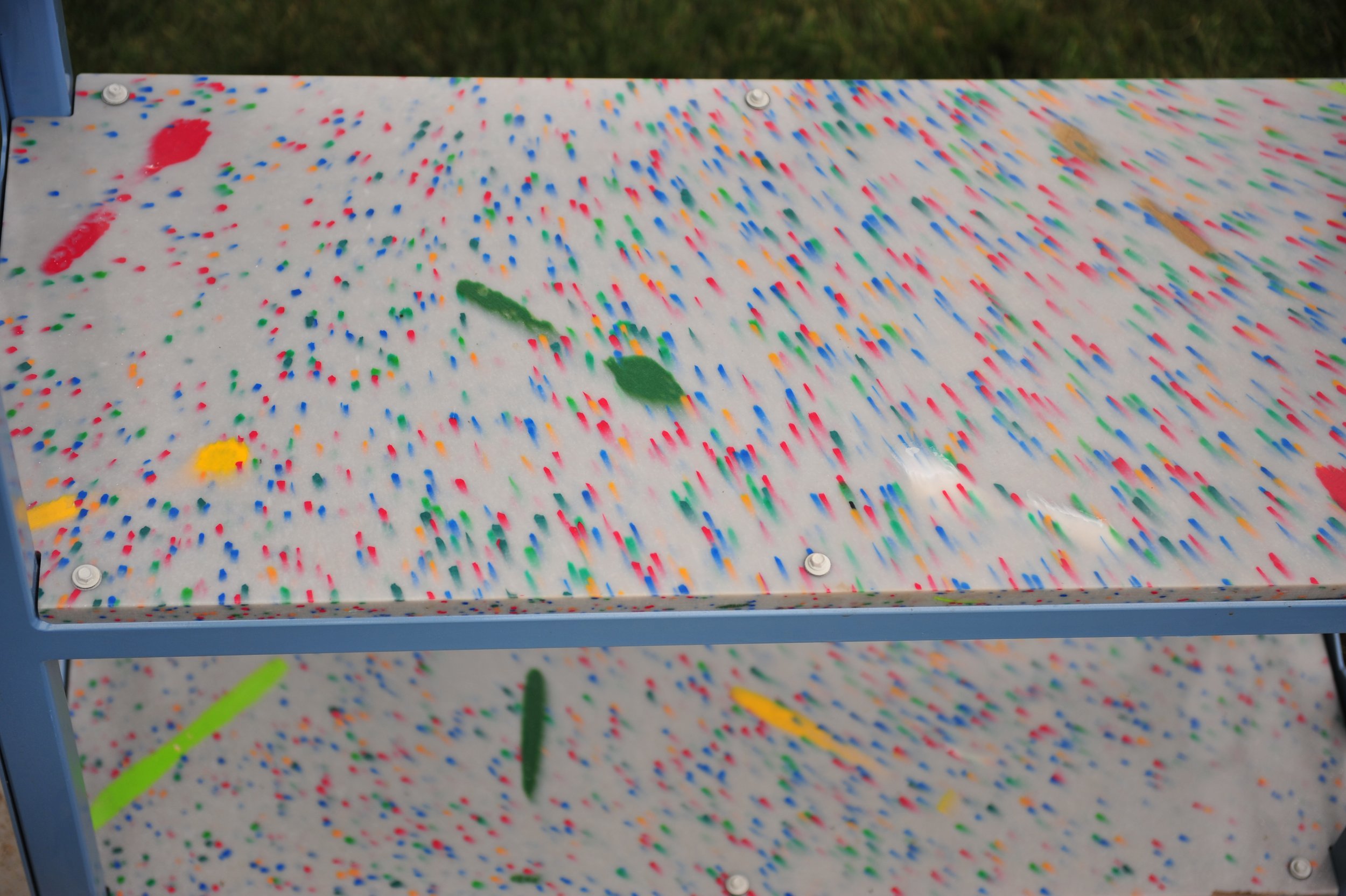
Lan Tuazon, Matters of Consequence
Photo: Ryan C McMahon.
Matters of Consequence doesn't only suggest earth-friendly behavior; it embodies it. Made from discarded plastic, the sculpture gives landfill-bound materials a new life.
“I think the real loss is that we extract things from the world as raw materials, but we also throw them away and return them to the landscape as garbage,” Tuazon said on the topic of consumerism and waste.
With a background in anthropology and photography, Tuazon doesn’t just look at the way objects affect humans; she also examines the way humans affect objects.
“Our care for things is training for how we care for life in general. Things are the materials and matter of life – hence the title of the work,” Tuazon said. “I got into reinventing materials from waste because I was trying to figure out a way of extending the lifespan of things.”
Think of a ceramic plate. If it breaks, its human value disappears, though its makeup remains the same. Denounced as trash, its life comes to an abrupt halt. When you instead look at the object’s entire life cycle, its value changes once it is allowed to have a story, a biography.
Many of Tuazon’s projects emulate the cyclical processes of nature such as growth and accumulation. In her archive No Nouns Left Whole, Tuazon nestles broken containers into one another, like growth rings on a tree. These fractured materials eventually grow into another collection, Future Fossils.
“I'm trying to naturalize human culture,” Tuazon said. “Maybe it's harder to dispense of the value of things, if you can see it all as natural.”
Matters of Consequence is its own life cycle of sorts. Through a partnership with The Recycling Studio, an organization in Costa Rica that revamps discarded materials, the sculpture is made of past lives, with forks, spoons and knives visibly melted on the surface.
“The cycle continues and things grow,” Tuazon said. “The exciting part is it's a test site, guided by the question, how can the circular economy produce social currency? So we’ll live and learn.”
Learn more about the artist here.
Find Matters of Consequence in the University Hall Atrium at UMass Boston, presented in collaboration with Arts on the Point.
